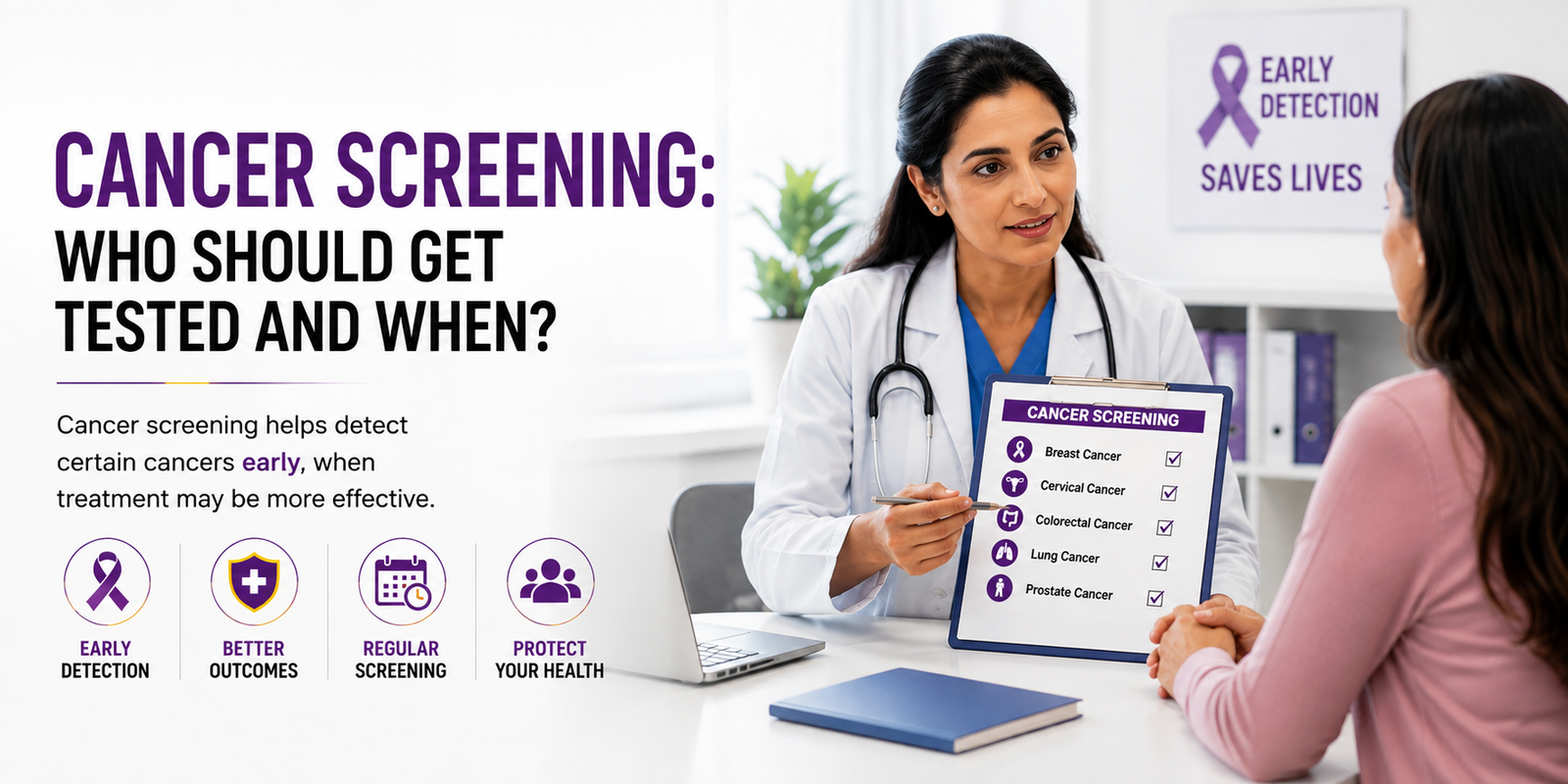
Cancer screening can help find certain cancers before symptoms appear. Finding cancer early can sometimes make treatment easier and may improve outcomes. Some screening tests can even identify precancerous changes and allow doctors to treat them before cancer develops.
However, cancer screening is not the same for everyone. The right test and screening schedule depend on factors such as age, sex, family history, personal health history, genetic risk, and lifestyle. Understanding when to get screened can help people make informed decisions about their health.
What Is Cancer Screening?
Cancer screening means checking for certain types of cancer in people who do not have symptoms. The goal is to identify cancer or abnormal changes as early as possible.
Screening is different from diagnostic testing. Diagnostic tests are usually performed when someone has symptoms, an abnormal screening result, or another reason to suspect cancer.
For example, a routine mammogram may be used to screen for breast cancer in someone without symptoms. If the mammogram shows an abnormal area, additional imaging or a biopsy may be recommended to determine what is causing the finding.
Not every cancer has a routine screening test. Screening recommendations are based on research showing when a test is likely to provide more benefit than harm.
Why Is Cancer Screening Important?
Many cancers can develop without causing noticeable symptoms in their early stages. By the time symptoms appear, the disease may already be more advanced.
Regular screening can help doctors identify certain cancers earlier, when treatment may be more effective. Some screening tests can also prevent cancer. For example, colorectal screening can identify precancerous polyps that may be removed before they develop into cancer.
Cancer screening should therefore be viewed as one part of a broader approach to cancer prevention and early detection.
Who Should Get Cancer Screening?
There is no single screening schedule that applies to everyone. People at average risk generally follow age-based recommendations, while those at higher risk may need to begin screening earlier or undergo additional tests.
People who may need personalized screening plans include those with:
- A strong family history of cancer
- A previous diagnosis of cancer
- Known inherited genetic mutations linked to cancer
- Certain chronic medical conditions
- A history of heavy tobacco use
- Previous abnormal screening results
- Other factors that increase their individual cancer risk
If several close relatives have had the same or related types of cancer, it is especially important to discuss that history with a healthcare professional.
Common Cancer Screening Tests
Different cancers require different screening methods. Some of the most commonly used screening tests include the following.
Breast Cancer Screening
A mammogram is the primary screening test used to look for breast cancer. Mammography can identify abnormal areas that may not be noticeable during a physical examination.
Screening recommendations can vary depending on age and individual risk. People with a strong family history of breast cancer or certain inherited genetic changes may need earlier or more intensive screening.
Depending on their risk, some individuals may also benefit from breast MRI in addition to mammography.
An abnormal mammogram does not automatically mean cancer. Additional imaging or testing may be needed to understand the finding.
Cervical Cancer Screening
Cervical cancer screening is designed to identify abnormal cervical cells or infections with high-risk types of human papillomavirus (HPV).
Common screening methods include:
- HPV testing
- Pap testing
- HPV and Pap co-testing
The appropriate method and screening interval depend on age, previous test results, and individual circumstances.
The HPV vaccine can significantly reduce the risk of HPV-related cancers, but vaccination does not eliminate the need for recommended cervical cancer screening.
Colorectal Cancer Screening
Colorectal cancer screening can detect cancer as well as precancerous growths called polyps.
Screening options may include:
- Colonoscopy
- Stool-based tests
- Stool DNA tests
- CT colonography
A colonoscopy has an additional advantage because doctors can remove certain polyps during the procedure.
People with a family history of colorectal cancer, previous polyps, or certain bowel conditions may need to start screening earlier or undergo testing more frequently.
Lung Cancer Screening
Lung cancer screening is generally recommended for people who have a significant history of smoking and meet specific age and risk criteria.
The main screening method is a low-dose CT scan of the lungs. Unlike a standard chest X-ray, low-dose CT can detect smaller abnormalities.
People who have never smoked or who do not meet the required risk criteria generally do not benefit from routine lung cancer screening.
Anyone with a significant smoking history should discuss their individual risk with a healthcare professional.
Prostate Cancer Screening
Prostate cancer screening commonly involves a prostate-specific antigen (PSA) blood test. A digital rectal examination may also be considered in certain circumstances.
PSA testing is not automatically recommended for every person because elevated PSA levels can have causes other than cancer. Testing can also lead to additional procedures and treatment for cancers that may never have caused symptoms.
Men should discuss the potential benefits and risks of prostate cancer screening with their healthcare provider, particularly if they have a family history or other risk factors.
Oral Cancer Screening
Oral cancer screening typically involves examining the mouth, tongue, gums, throat, and surrounding tissues for unusual changes.
People who use tobacco or consume large amounts of alcohol may have a higher risk of oral cancer.
A persistent mouth sore, unusual patch, unexplained bleeding, difficulty swallowing, or a lump should be evaluated by a healthcare professional rather than waiting for a routine screening appointment.
When Should Cancer Screening Begin?
The right time to begin screening depends on the type of cancer and a person’s individual risk.
Some screenings begin during adulthood, while others are recommended later in life. Screening may also stop at a certain age depending on overall health, life expectancy, previous screening history, and personal preferences.
People with increased cancer risk may need to start earlier than standard recommendations.
Instead of relying on a general age alone, it is better to discuss a personalized screening schedule with a doctor.
Warning Signs You Should Not Ignore
Cancer screening is intended for people without symptoms. If symptoms appear, they should be evaluated rather than waiting for the next screening test.
Possible warning signs can include:
- Unexplained weight loss
- A new lump or swelling
- Persistent cough or hoarseness
- Unusual bleeding
- Changes in bowel or bladder habits
- A sore that does not heal
- Persistent difficulty swallowing
- Ongoing unexplained pain
- Changes in the appearance of a mole
- Persistent fatigue without an obvious cause
These symptoms can have many causes and do not necessarily indicate cancer. However, persistent or unexplained changes should be discussed with a healthcare professional.
Cancer Screening and Family History
Family history can play an important role in determining cancer risk.
If a parent, sibling, or child has had certain cancers, a doctor may recommend a more detailed risk assessment. Depending on the pattern of cancer in a family, genetic counseling or genetic testing may also be appropriate.
Inherited mutations such as BRCA1 and BRCA2 can increase the risk of certain cancers. Identifying an inherited risk may allow a person and their healthcare team to create an earlier or more intensive screening plan.
Cancer Screening Is Not the Same as Cancer Prevention
Screening and prevention are closely connected, but they are not identical.
Cancer prevention focuses on reducing the chances of developing cancer. This can include avoiding tobacco, maintaining a healthy weight, staying physically active, limiting alcohol, protecting the skin from excessive ultraviolet exposure, getting recommended vaccinations, and following a balanced diet.
Screening focuses on finding certain cancers or precancerous changes early.
Combining healthy lifestyle choices with appropriate screening can provide a stronger overall approach to cancer risk reduction.
How to Create a Cancer Screening Plan
A personalized cancer screening plan can begin with a conversation with a primary care doctor or appropriate specialist.
Before the appointment, it can help to know:
- Your age and previous screening history
- The types of cancer that have occurred in your family
- The age at which relatives were diagnosed
- Any previous abnormal test results
- Your smoking and tobacco history
- Any known genetic conditions or test results
- Any current or persistent symptoms
Your healthcare provider can use this information to determine which screenings may be appropriate and how frequently they should be performed.
Final Thoughts
Cancer screening can play an important role in detecting certain cancers early and, in some cases, preventing cancer altogether. However, screening should not be treated as a one-size-fits-all checklist.
The appropriate screening test and schedule depend on the type of cancer, age, family history, personal health history, genetic risk, and other individual factors.
If you are unsure whether you need cancer screening or when you should begin, speak with a qualified healthcare professional. Staying informed and keeping recommended screenings up to date can be an important part of taking care of your long-term health.