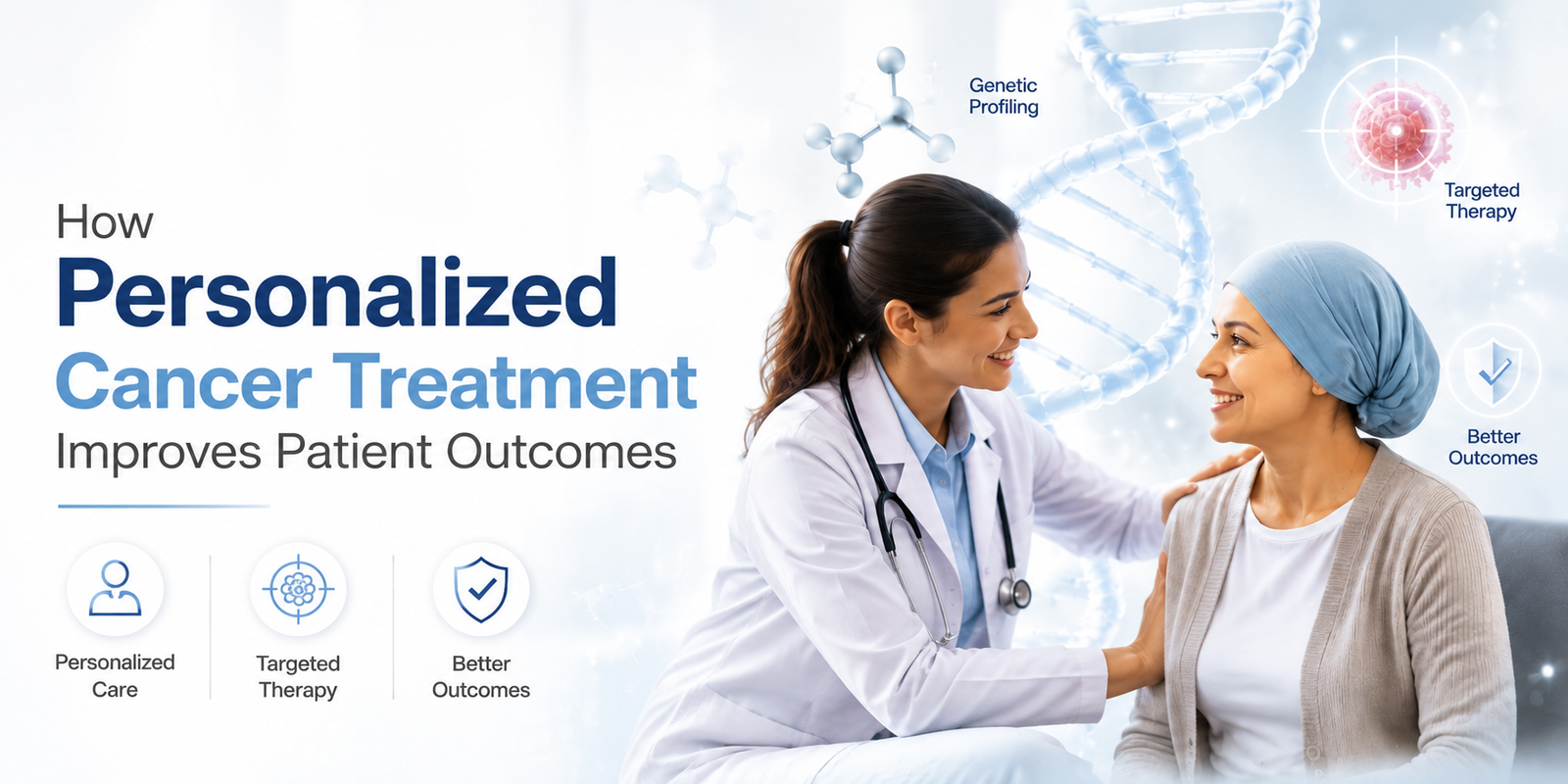
For decades, cancer treatment worked off a simple assumption: same cancer, same drugs. Personalized cancer treatment has turned that on its head. Instead of treating “breast cancer” or “lung cancer” as one disease, doctors now look at what’s actually going on inside each patient’s tumor and build the plan from there. Better response rates, longer survival, fewer severe side effects. It’s also becoming more available every year, not less. One large analysis of over 47,000 tumors found the share carrying a treatable biomarker jumped from 8.9% in 2017 to 31.6% just five years later. And close to half of all new cancer drugs the FDA has approved over the past 25 years got that approval specifically for targeting a genetic change driving tumor growth.
What Is Precision Oncology?
Two people can get the exact same diagnosis and respond completely differently to the exact same drug, because their tumors aren’t actually the same at a genetic level. Precision Oncology grew out of that observation. It means matching cancer therapy to the specific genetic and molecular profile of a patient’s tumor, instead of treating every case of a given cancer the same way. Precision Medicine is the broader term for this idea across all of medicine, but oncology is where it’s produced some of the clearest, easiest to measure wins.
Precision Medicine in Cancer: How It Actually Works
Precision Medicine in Cancer starts with a close look at the tumor’s DNA. Molecular Testing for Cancer and Genetic Testing for Cancer analyze a sample from the tumor to figure out which mutations are actually driving its growth, and Biomarker Testing checks which of those mutations have a known, targetable treatment attached to them. In one large retrospective trial, patients whose therapy was matched to their tumor’s molecular profile had a response rate of 16.2%, versus just 5.2% for patients on unmatched, standard therapy. Three times the response rate, from what amounts to a diagnostic step before treatment even starts.
From Cancer Care to Personalized Oncology Care
Traditional Cancer Care ran on protocols: a diagnosis led into a standard sequence of treatments, mostly regardless of how that particular patient’s cancer actually behaved. Personalized Oncology Care flips that order. Testing comes first, and the treatment plan gets built on what the tumor’s own biology says will actually work, not on what worked for the average patient with the same diagnosis. Age, organ function, and metabolism all affect how someone processes a drug too, so it’s never just about whether the drug hits the right mutation.
Precision Cancer Treatment vs. Traditional Cancer Treatment Options
Among all the Cancer Treatment Options available, Precision Cancer Treatment stands apart because it’s chosen based on evidence from that specific patient’s tumor rather than population averages. That doesn’t mean Chemotherapy disappears. It still has a real role, especially for cancers without a clear targetable mutation, and it’s often paired with newer approaches rather than dropped entirely. What changes is how selectively it gets used, as the tool for when it’s genuinely the best option rather than the automatic first move.
Targeted Therapy Explained
Targeted Therapy attacks the specific molecular changes fueling a particular tumor, rather than broadly hitting every fast-dividing cell the way conventional chemotherapy does. A 2023 study in the Annals of Oncology found non-small cell lung cancer patients who got targeted therapy matched to their tumor’s genetic profile had a 37 percent lower risk of disease progression or death compared to those on standard chemotherapy. It’s now standard practice for several cancer types, including melanoma, colorectal cancer, and non-small cell lung cancer, and for good reason.
Immunotherapy for Cancer
Immunotherapy for Cancer takes a different approach entirely. Rather than attacking the tumor directly, it works by helping the patient’s own immune system recognize and go after cancer cells. It’s often used alongside targeted therapy as part of a broader personalized plan, especially for cancers that have historically been tough to treat with chemotherapy alone. Biomarker results also determine who’s likely to respond well to immunotherapy, which is one more reason molecular testing has become a routine first step instead of an afterthought.
Advanced Cancer Treatment and Measurable Outcomes
Advanced Cancer Treatment built on precision principles doesn’t just improve response rates. It also tends to be easier on the patient’s body. In one recent multi-drug precision oncology trial, only 6.5% of patients had severe or life-threatening drug-related toxicities, compared with 15.5% on standard treatment regimens. Fewer severe side effects means people are more likely to actually finish their treatment plan and keep up with daily life while going through it. That matters for long-term outcomes almost as much as the drugs themselves do.
The Role of Your Medical Oncologist and Cancer Specialist
None of this works without someone who knows how to read it. A Medical Oncologist or Cancer Specialist interprets the biomarker and genetic testing results, weighs them against the patient’s overall health, and builds the actual Oncology Treatment plan from there. There’s a lot more data feeding into these decisions now than there used to be, and it takes real expertise to turn that data into a plan that fits the person in front of them, not just the mutation listed on a lab report.
Where Precision Oncology Still Falls Short
It’s worth saying plainly: precision oncology doesn’t help everyone equally yet. Whether a patient has a treatable mutation, and which drugs exist for it, varies by cancer type and by genetic ancestry. Some mutations simply show up more often in certain populations than others, and drug development hasn’t caught up evenly across the board. None of that is a reason to skip testing. If anything it’s a reason to sit down with your care team and ask exactly what your results do and don’t open up for you.
Where Personalized Medicine Is Headed
Personalized Medicine in oncology is still growing. It’s already standard of care for lung, breast, and colorectal cancers, and researchers are working on extending molecular testing and targeted treatment to rarer cancers where the data has historically been thinner. As testing gets cheaper and faster and more targeted drugs reach approval, the gap between standard treatment and truly personalized treatment should keep closing in the patient’s favor.
Final Thoughts
Cancer was never really just one disease. Treating it like one was always going to leave outcomes on the table. Personalized cancer treatment, built on genetic testing, biomarker analysis, targeted therapy, and immunotherapy, is closing that gap with results you can actually measure: higher response rates, longer survival, fewer severe side effects. If you or someone you love is weighing treatment options, ask the oncologist directly whether molecular or biomarker testing makes sense for that specific diagnosis. It’s often the first real step toward a plan built around your cancer, not just its name.