
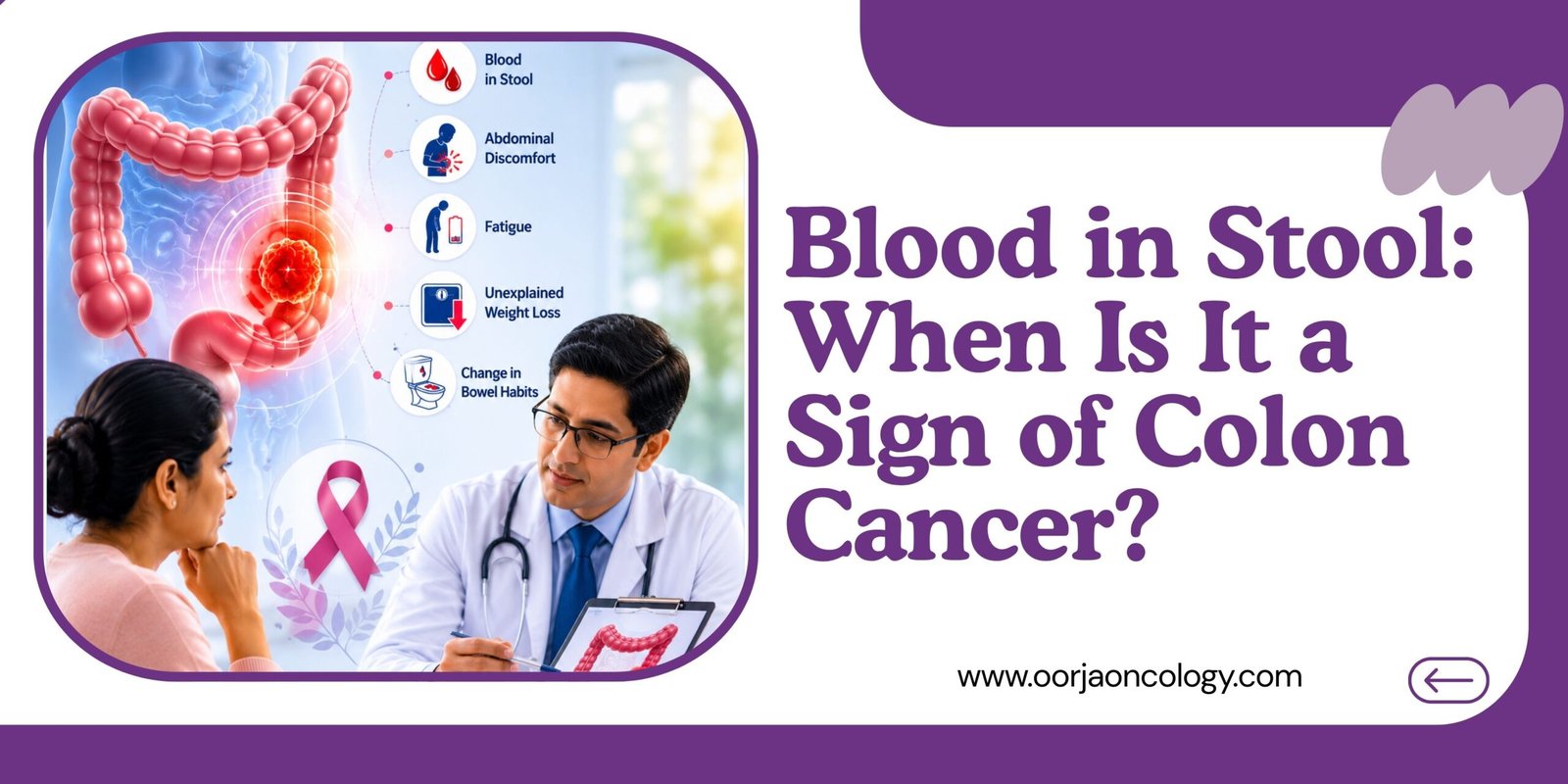
Finding blood in stool is one of those moments that stops you mid thought. You’re in the bathroom, you look down, and suddenly your whole day has a different shape to it. Most of the time, blood in poop comes from something fairly ordinary, like hemorrhoids or a small fissure. But rectal bleeding is also one of the more common early signs of colon cancer, which is why doctors never tell patients to simply ignore it. At Oorja Oncology, our oncology specialist team gets asked this question constantly: how do you tell the difference between bleeding that’s harmless and bleeding that points to something more serious? Below, we walk through the causes, the colon cancer symptoms worth paying attention to, the screening tests doctors actually rely on, and when it’s time to get checked.
Quick answer: Blood in stool is not automatically a sign of cancer. Most cases come from hemorrhoids, fissures, or minor digestive issues. But if the bleeding is recurring, dark or tar like, or shows up alongside weight loss, fatigue, or a change in bowel habits, it needs a proper medical evaluation, not a guess.
What Blood in Stool Can Actually Look Like
Not all rectal bleeding looks the same, and the color often tells you roughly where in the digestive tract it’s coming from.
- Bright red blood, usually on the toilet paper or in the bowl, generally points to bleeding lower down, near the rectum or anus
- Dark red or maroon stool can mean bleeding somewhere in the colon itself
- Black, sticky, dark stool (doctors call this melena) usually means bleeding higher up in the stomach or small intestine, though it can occasionally come from the right side of the colon as well
- Sometimes there’s no visible blood at all. This is called occult bleeding, and it’s often only picked up through a stool test or because someone develops unexplained anemia
That last point matters more than people realize. A lot of early signs of colon cancer are quiet. The bleeding can be slow and small enough that you’d never notice it just by looking, which is exactly why screening exists in the first place rather than waiting for symptoms to show up.
Common Blood in Stool Causes (Most Aren’t Cancer)
Before anyone panics, it’s worth knowing that blood in stool causes are usually benign. The most frequent ones include:
- Hemorrhoids, which are swollen veins around the anus or lower rectum, often triggered by straining, pregnancy, or sitting for long periods
- Anal fissures, small tears that often happen after constipation or passing a hard stool
- Diverticulosis, small pouches that form in the colon wall and occasionally bleed without warning
- Inflammatory bowel disease, such as Crohn’s disease or ulcerative colitis, which can cause bleeding along with cramping and urgency
- Infections, including bacterial or parasitic infections of the gut
- Polyps, small growths in the colon lining that are usually harmless but can sometimes turn into cancer over years
The tricky part is that none of these causes look all that different from each other when you’re standing in your bathroom trying to figure out what just happened. A fissure and an early tumor can both produce a small streak of bright red blood. That’s exactly why a doctor’s evaluation matters more than guessing, and why self diagnosing off a symptom checklist tends to do more harm than good.
Signs of Colon Cancer to Watch Alongside Bleeding
Blood in stool on its own doesn’t mean cancer. But when it shows up with other changes, especially if those changes stick around for more than two or three weeks, it’s worth taking seriously. Some of the more common colorectal cancer symptoms include:
- A change in bowel habits that lasts, like new constipation, diarrhea, or alternating between the two
- Stools that look noticeably thinner or narrower than usual
- A constant feeling that you haven’t fully emptied your bowels, even right after going
- Cramping or abdominal pain that doesn’t go away or keeps coming back in the same spot
- Unexplained weight loss without any change in diet or activity
- Ongoing fatigue, sometimes from low grade anemia caused by slow internal bleeding nobody noticed
These bowel cancer symptoms overlap heavily with general colon cancer symptoms, since colon cancer and rectal cancer are grouped together under the broader term colorectal cancer. Signs of colon cancer are easy to brush off because they resemble a bad week of digestion or a stomach bug. The honest answer is that you often can’t tell the difference at home, no matter how carefully you track your symptoms. That’s what testing is for.
Risk Factors Worth Knowing
Colon cancer doesn’t only happen to older adults, though age is still the biggest single risk factor. Other things that raise your risk include:
- Being over 45, the age at which most major guidelines now recommend screening begins
- A family history of colorectal cancer or polyps, especially in a parent or sibling
- A personal history of inflammatory bowel disease
- A diet heavy in red or processed meat and low in fiber
- Obesity, smoking, and regular heavy alcohol use
- A sedentary lifestyle with little physical activity
One trend worth mentioning, especially for readers in India, is that colorectal cancer is increasingly being diagnosed in people under 50, and a noticeable share of these younger cases are caught at a later, harder to treat stage simply because nobody suspected cancer in someone that age. Doctors aren’t entirely sure why early onset cases are rising, but it’s part of why ignoring rectal bleeding because “I’m too young for cancer” isn’t good logic anymore.
How Colon Cancer Diagnosis Works
If you go to a doctor with blood in stool, the path usually looks something like this. First comes a physical exam and a conversation about your symptoms, family history, and how long this has been going on. From there, colon cancer diagnosis typically involves:
- A stool test (FIT or FOBT) to check for hidden blood that isn’t visible on its own
- Blood tests to check for anemia or other markers that suggest ongoing blood loss
- A colonoscopy, which lets the doctor look directly at the lining of the colon and remove or biopsy anything that looks unusual
- Imaging like a CT scan, if the doctor needs to see beyond the colon itself or check whether anything has spread
A colonoscopy is still considered the most reliable way to find both polyps and early cancers, since it allows direct removal of suspicious tissue during the same procedure, which means diagnosis and treatment can sometimes happen in a single visit.
Colorectal Cancer Screening: Who Needs It and When
This is the part people skip, and it’s the part that actually saves lives. Cancer screening isn’t just for people with symptoms. It’s meant to catch polyps and early cancers before they ever cause bleeding or pain.
Current guidelines recommend average risk adults start colorectal cancer screening at age 45. If you have a family history of colorectal cancer, your doctor may recommend starting earlier, often ten years before the age your relative was diagnosed. Screening options include colonoscopy (usually every 10 years if results come back normal), annual stool based tests like FIT, or a combination of both, depending on your personal risk level and what your doctor recommends.
If you’ve already had blood in poop, screening conversations tend to move faster than a routine check up would. At that point, it’s less about preventive screening and more about figuring out what’s actually causing the bleeding right now.
Why Catching It Early Actually Matters
This is the part the statistics make hard to argue with. According to data from the National Cancer Institute’s SEER program, the five year survival rate for colorectal cancer caught while it’s still localized, meaning it hasn’t spread beyond the colon or rectum, is around 90 percent. Once it has spread to nearby lymph nodes, that drops to roughly 73 percent. Once it has spread to distant organs like the liver or lungs, it falls to somewhere between 14 and 17 percent.
That gap isn’t really about how aggressive the cancer is. It’s almost entirely about timing. Colon cancer tends to grow slowly, often spending ten or more years as a harmless looking polyp before it turns into something dangerous, which gives screening a real window to catch it early. Once it’s found early, treatment tends to be shorter, less invasive, and far more likely to be curative.
Blood in Stool Treatment Depends on the Cause
There’s no single blood in stool treatment, because treatment follows the diagnosis, not the symptom. For hemorrhoids or fissures, that might mean dietary changes, topical treatment, or a minor in office procedure. For inflammatory bowel disease, it usually means long term medication management with a gastroenterologist. For polyps, removal during colonoscopy is often enough on its own to prevent the issue from ever becoming cancer.
If the cause turns out to be colorectal cancer, treatment depends heavily on the stage. Early stage cancers are often treated with surgery alone. More advanced cases may involve chemotherapy, radiation, or targeted therapies, sometimes in combination. This is where seeing an oncology specialist early actually changes outcomes, not just statistically but in terms of how much treatment a person actually has to go through.
When to See a Doctor Right Away
Most blood in stool doesn’t require an emergency room visit, but some situations do. Get checked immediately if you notice:
- Heavy or continuous bleeding that doesn’t slow down
- Dizziness, lightheadedness, or fainting
- Severe abdominal pain along with the bleeding
- Blood in stool combined with unexplained weight loss or persistent fatigue
For anything less urgent but still ongoing, a visit to a gastroenterologist or oncology specialist is the right move, especially if the bleeding has lasted more than a week or two, or if you’re over 45 and haven’t been screened yet.
Frequently Asked Questions
Is blood in stool always a sign of cancer?
No. Most cases come from hemorrhoids, fissures, or minor digestive issues. Cancer is one possible cause among several, which is exactly why it needs to be checked rather than assumed either way.
What does cancer related blood in stool usually look like?
There’s no single appearance. It can be bright red streaks, dark red mixed into the stool, or black tarry stool. The only way to know the actual cause is through testing, not color alone.
Can stress or diet cause blood in stool without anything serious going on?
Diet can play a role indirectly, for example a low fiber diet leading to constipation and a fissure. Stress on its own doesn’t typically cause visible bleeding, but ongoing digestive symptoms still deserve a proper look.
At what age should I start colorectal cancer screening?
Most current guidelines recommend starting at 45 for average risk adults, earlier if you have a family history of colorectal cancer or certain other risk factors.
How fast does colon cancer develop from a polyp?
It usually takes around 10 to 15 years for a polyp to turn into cancer, which is part of why regular screening at the recommended intervals is so effective at prevention.
Why Early Diagnosis Changes the Outcome
At Oorja Oncology, we’d rather see someone come in for a bleeding episode that turns out to be hemorrhoids than have someone wait two years because they assumed it was nothing. If you’re searching for the best oncologist for colon cancer near you, or just want a second opinion on persistent rectal bleeding, getting evaluated early is the one decision that consistently makes the biggest difference in outcomes.